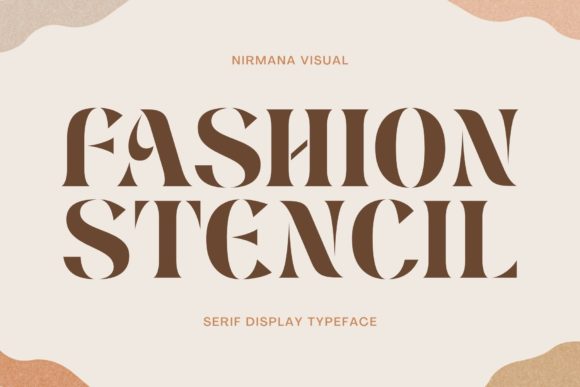
Fashion Stencil: A Stylish Serif for Creative Projects
There I was, staring at a blank brand board, trying to find the right tone for a new boutique identity. The client wanted something modern but with a touch of elegance—something that felt both fresh and timeless. That’s when I reached for Fashion Stencil, a contemporary serif font that promised typographic harmony across a range of design projects.
A Font with Personality
Fashion Stencil has a distinct personality. It’s not the kind of font you’d use for body text, but as a display or headline font, it shines. The serifs are clean yet expressive, giving the typeface a refined edge while maintaining a sense of approachability. Its curves are soft enough to feel warm, but its structure is strong enough to command attention.
What stands out is how well it balances form and function. It doesn’t scream for attention, but it doesn’t blend into the background either. Whether I was testing it on a logo concept or placing it on a packaging mockup, it always felt like the right choice for a brand looking to make a statement without being overwhelming.
Real-World Testing
I first used Fashion Stencil in a logo draft for a small skincare brand. The goal was to create a visual identity that felt both luxurious and trustworthy. I paired it with a simple sans serif for the tagline, which helped keep the composition from feeling too busy. The result was a clean, cohesive look that felt professional yet inviting.
On a business card, it worked well as a headline, drawing the eye without overshadowing the contact details. On a website header, it added a touch of sophistication that elevated the overall aesthetic. In social media graphics, it held its own against bold images and vibrant colors, never losing clarity or impact.
One of the most interesting moments came when I placed it on a product label for a handmade soap line. The font’s subtle detailing complemented the organic nature of the product, making it feel like a natural extension of the brand’s story.
When to Use Fashion Stencil
Fashion Stencil excels as a display or accent font. It’s ideal for headlines, logos, and short phrases where visual appeal is key. Its readability at larger sizes makes it perfect for signage, posters, and editorial design. But it’s not the best choice for long blocks of text or small print, where its intricate details might become difficult to read.
It also works well when paired with other fonts. I found that combining it with a minimalist sans serif created a balanced contrast, while pairing it with a script font added a layer of elegance that felt effortless. For a more modern look, it pairs nicely with a geometric sans serif, offering a mix of tradition and innovation.
Limitations and Considerations
While Fashion Stencil is versatile, it’s not a one-size-fits-all solution. In corporate branding, where simplicity and clarity are often prioritized, it might feel too ornate. Similarly, in projects that require a lot of small text, such as brochures or instructional materials, it could compromise legibility.
It’s also important to consider the context. A café’s menu board might benefit from its charm, but a legal document would likely need something more formal. As with any font, understanding the audience and the message is key to using it effectively.
Practical Tips for Designers
If you’re considering Fashion Stencil for a project, test it in different sizes and contexts before finalizing your design. Print samples can reveal how it looks on paper, while digital previews help assess its performance on screens. Pay attention to spacing and alignment, as even small adjustments can make a big difference in how the font reads.
Also, check the font’s licensing terms before using it in client work. Make sure you have the right to use it in commercial projects, especially if you’re creating templates, merchandise, or print-on-demand products. Some fonts come with restrictions that could limit your creative freedom.
Finally, don’t be afraid to experiment. Fashion Stencil offers a unique blend of style and functionality, and there are countless ways to incorporate it into your design work. Whether you’re building a brand from scratch or refreshing an existing identity, it’s a font worth exploring.